









Safe access to confined spaces: why traditional systems are not enough and how the AVAHO range makes a difference
In sectors such as food, energy, water treatment, or cement, work in confined spaces is a regular part of maintenance operations. Tanks, wells, reactors, silos, or manholes require periodic inspections, cleaning, or repairs. However, when access to these spaces is vertical and there is no physical means of entry (such as stairs or platforms), the risk increases significantly.
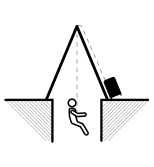
The real risk of confined spaces with vertical access
Confined spaces are, by definition, high-risk environments: hazardous atmospheres, reduced spaces, difficulty in evacuation, low visibility, etc. When access is exclusively vertical, critical factors are added:
- Total dependence on the access system
- Greater complexity in case of rescue
- Worker fatigue in manual maneuvers
- Increased intervention time
In this context, choosing the right system is not just a matter of efficiency, but of safety and regulatory compliance. The common mistake: relying on systems designed only for rescue or cargo lifting systems "adapted" for personnel lifting: In many installations, solutions such as:
- Conventional tripods (certified only as anchor points and rescue systems)
- Equipment certified under EN 795
- Fall protection systems with specific rescue devices
- Chain or cable hoists for cargo lifting with a retractable fall protection system with or without a parallel rescue system
These equipment are valid for specific functions, but have a key limitation: They are not designed for continuous personnel lifting or as an operational access system. Their primary function is:
- To serve as anchor points for personal protective equipment
- To allow occasional rescue
- Cargo lifting, they do not have the necessary safety systems or safety coefficients for personnel lifting.
But they should not be used as a regular vertical access system, since:
- They do not guarantee ergonomics or productivity
- They are not optimized for repetitive work cycles
- They increase the risk in prolonged maneuvers
- They are not certified for that function, with a high risk of accidents and problems for the company in case of an incident. Therefore, they are not safe from the user's point of view, nor from the company's or risk prevention perspective.
The solution: systems designed for personnel lifting This is where the fundamental difference comes in. The AVAHO range systems are designed from the outset as:
Systems for ACCESS, WORK, and RESCUE
Equipment certified for personnel lifting
Solutions designed for frequent and safe use
They comply with specific regulations such as:
- EN 1808 (suspended access equipment for personnel)
- European Directive 2006/42/EC (European Machinery Regulation)
- Therefore, they have a CE marking for the complete system
This positions them in a completely different category compared to traditional systems.
AVAHO: SAFE AND EFFICIENT MOTORIZED ACCESS
The AVAHO range introduces two key changes in operations:
1-Motorized lifting
Compared to manual systems, AVAHO allows:
- Reduced physical effort
- Greater control in maneuvers
- Increased safety
2-Integrated rescue system
All equipment includes:
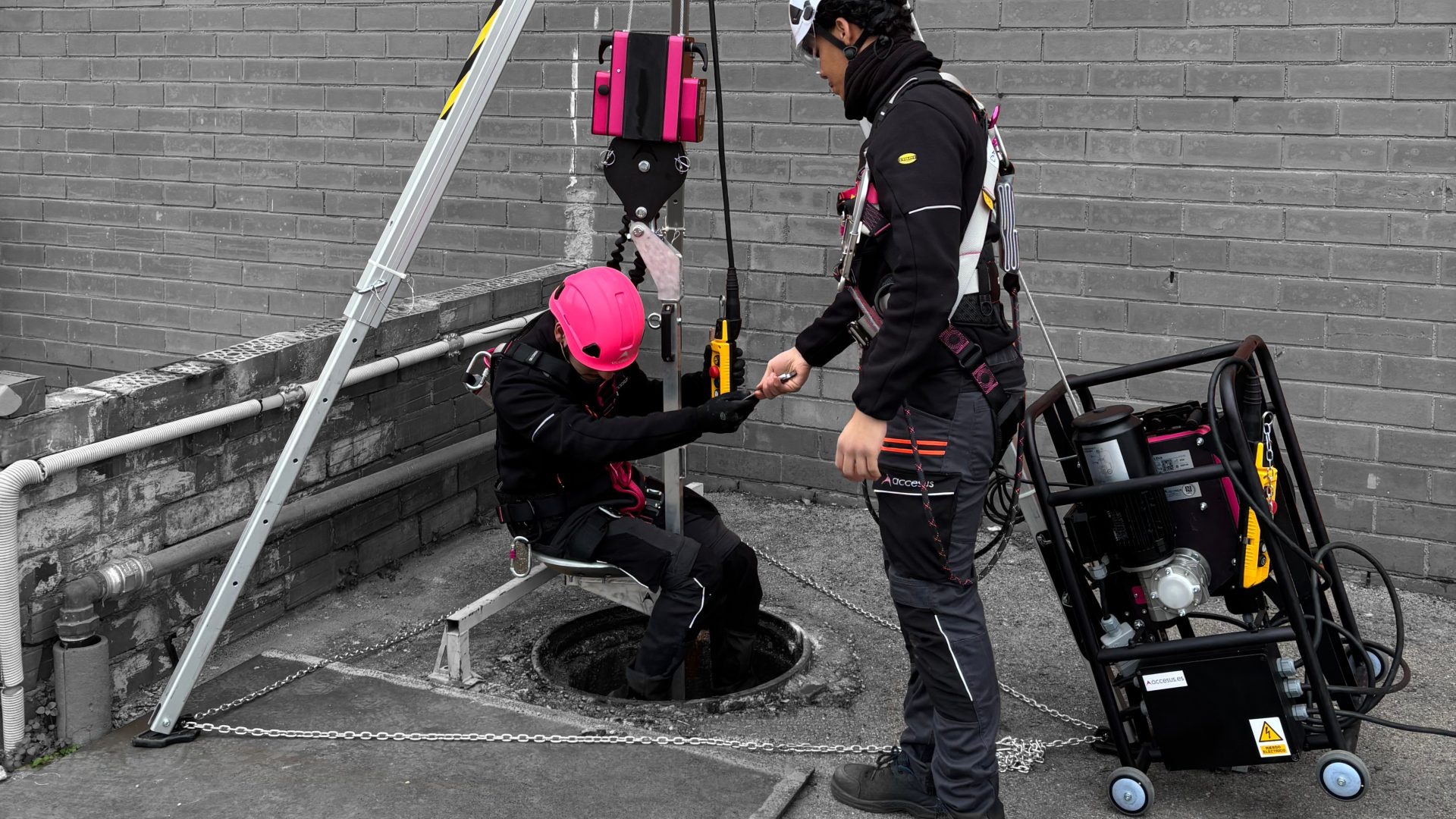
- Electric ascent and descent
- Dual control station:
- Primary, which allows total control by the user accessing the confined space
- Secondary or rescue, through a selector operable by key, allows total control from the outside of the confined space, enabling quick and risk-free rescue.
- Auxiliary manual emergency system for extreme situations of power failure.

This guarantees an immediate response to any incident.
Modularity: an adaptable solution for any environment
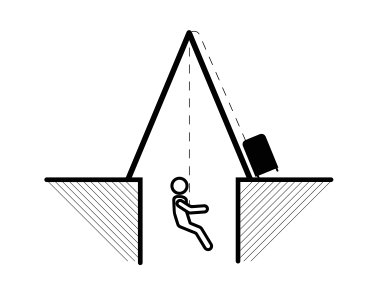
One of the greatest strengths of the AVAHO range is the diversity of possible configurations to provide the best solution: AVAHO Motorized rescue arm format
Compatibility with multiple operator transport elements:
- Harness
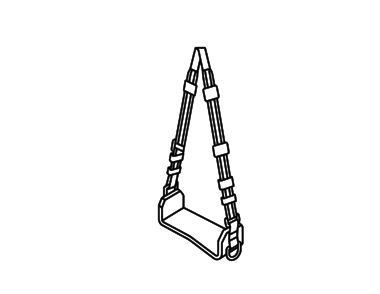
- Chair
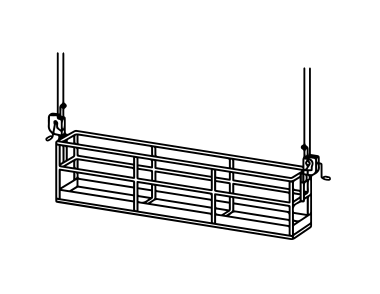
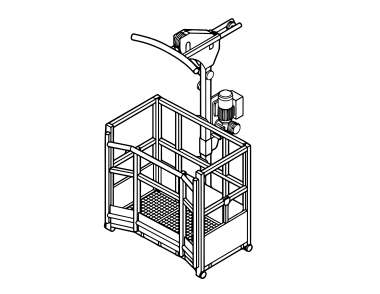
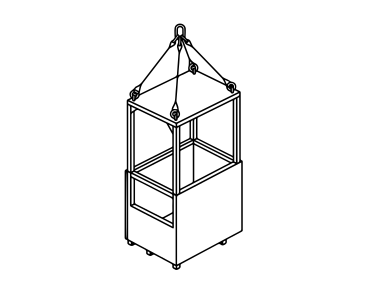
- Suspended cabins (circular or rectangular)

This allows designing a specific solution according to:
- Dimensions and location of the access point
- Frequency of use
- Environmental conditions
Operational efficiency: beyond safety
In addition to improving safety, AVAHO directly impacts productivity:
- Reduced access times
- Less operator fatigue
- Greater precision in positioning
- Improved maintenance planning
In recurring operations, this translates into cost savings and increased facility availability.
When should you consider an AVAHO system?
If in your confined space installation any of the following cases occur:
- Vertical accesses without stairs
- Periodic interventions in confined spaces
- Need to improve maintenance times
- Difficulty in ensuring safe rescues
- Use of cargo lifting systems combined with fall protection systems.
- Use of specialized personnel for high-altitude work for periodic interventions that could be performed by in-house personnel
- Environments with high lifting heights and/or high risk due to contamination and/or high temperatures.
It's time to reconsider the access system.
Conclusion: comply and protect
In many cases, current solutions do not meet the minimum requirements and are not designed for real and continuous use. The difference lies in the approach:
- Traditional systems → designed for anchoring and occasional rescue
- AVAHO range → designed for safe access, work, and rescue
In industrial environments where access to confined spaces is common, opting for systems certified for personnel lifting is not an improvement... it's a necessity.
Do you want to evaluate your case?
Each installation is different. Properly analyzing the type of access and use is key to defining the appropriate solution. If you are considering improving safety in confined spaces, it is worth studying which AVAHO configuration best suits your operations.