





ACCESUS Anchor and Short Sling Elements: Solution for Reduced Distances
What is a Short Sling?
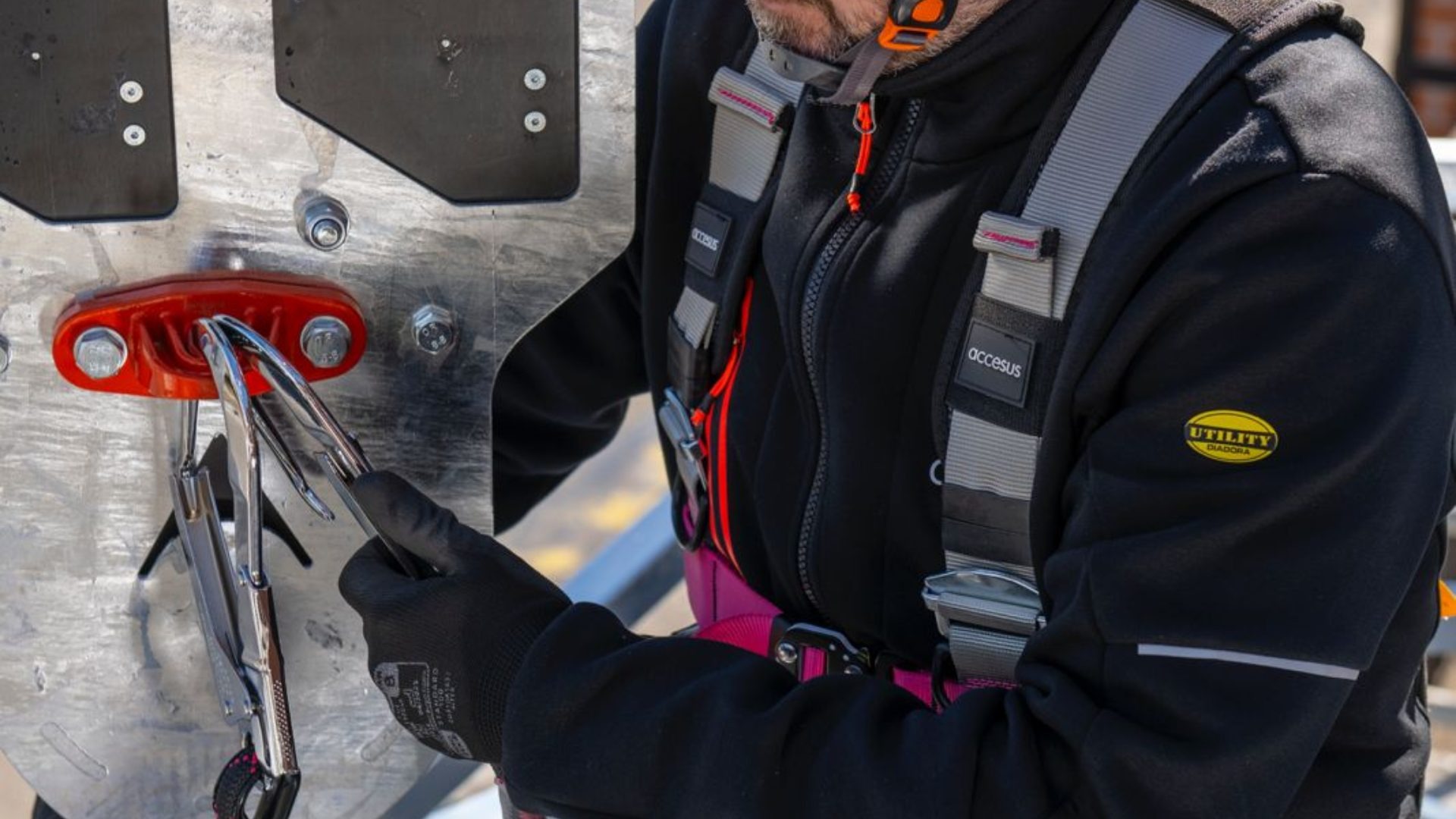
A sling is the anchor element that connects the user's harness to an anchor point. Short slings are shorter versions designed to reduce the total fall distance in environments where the vertical margin is limited. Their purpose is to stop a fall in the shortest possible distance and prevent the worker from hitting the ground or intermediate obstacles.
In the Accesus catalog, we have certified slings and anchor elements according to EN 354 and EN 355 standards, manufactured in different lengths to adapt to each operation, such as models 612413-090, 611413-09, or 610100-10.
.jpg) Short sling of 90 cm – 612413
Short sling of 90 cm – 612413
Advantages of Using Short Slings in Reduced Heights
Short slings allow working with greater control in areas where the available height is scarce. Among their advantages are:
- Reduction of the total fall distance
- Ease of working in limited heights (around 4.75 m, depending on the system used)
- Lower fall factor by keeping the user closer to the anchor
- Use of more compact shock absorbers that add less elongation
In very tight scenarios, it is recommended to place the anchor point as high as possible, opt for rigid anchors (rail, portal, metal structures), and ensure that the entire system is properly sized.
Risks of Working with Limited Height
When height is limited, margins of error are reduced. Some common risks are:
- Slings that are too long, preventing the shock absorber from acting in time.
- Shock absorbers that add too much elongation to the system
- Flexible anchors that stretch and increase the fall distance
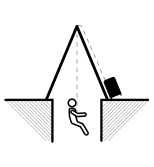
- Swing fall if the anchor is not well positioned
In these situations, only systems specifically designed for reduced fall distances should be used.
.jpg)
How to Calculate the Total Fall Distance
The fall distance is the minimum space required to safely stop a fall. It depends on several factors:
- Sling length
- Shock absorber elongation
- User height
- Anchor point position
- Additional safety margin
As a general reference, a 2-meter sling with a shock absorber that deploys up to 1.75 meters, added to a user of approximately 2 meters in height and a margin of 1 meter, requires a minimum working height of 6.75 meters. In reduced heights, this scenario becomes unviable, which reinforces the need for short slings.
.jpg)
How to Calculate the Fall Distance
Recommendations for Choosing and Using Anchor Elements and Short Slings
To select the appropriate equipment and ensure its correct use, it is recommended:
- Choose the right length
It should allow mobility without compromising the fall distance.
- Always calculate the total fall distance
Include sling length, shock absorber elongation, user height, and safety margin.
- Correct use of double slings
Avoid excessive length, connect only to suitable points, and do not make simultaneous anchor changes.
- Pre-use inspection
Check seams, connectors, wear, shock absorber, and label. If something generates doubt, it is discarded. If you have doubts about how to inspect a PPE, Accesus offers training in textile PPE inspection.
- Worker training
A correctly placed sling that is used incorrectly ceases to protect. It is essential to understand how to calculate the risk and move safely.
.jpg) Training on the use of Accesus PPE at customer facilities
Training on the use of Accesus PPE at customer facilities
Applicable Regulations
Slings used in fall protection systems must comply with European regulations:
- EN 354 for anchor elements without shock absorbers
- EN 355 for anchor elements with energy shock absorbers
Additionally, legislation requires that any fall risk greater than 2 meters be controlled using adequate fall protection PPE.
Conclusion
Short slings are essential in jobs where the available height is limited. They allow controlling the fall distance, minimizing risks, and operating safely in environments where a standard sling would be insufficient. Accesus bets on certified solutions adapted to each type of high work, combining design, resistance, and training to ensure user protection.
? More information: accesus@accesus.es
? 93 475 17 73