






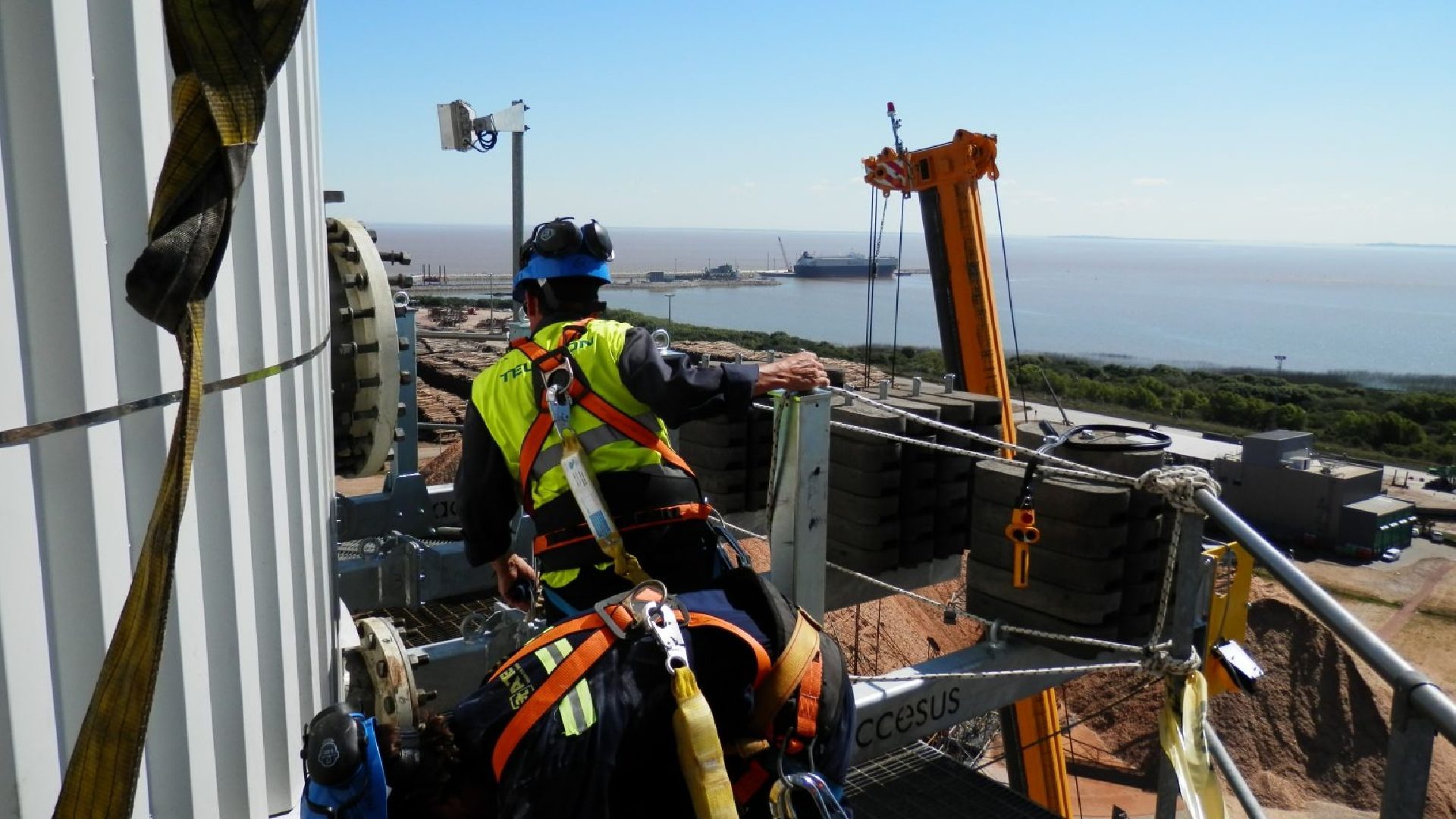
According to the regulations, all work carried out at a height of two metres with a risk of falling must be equipped with safety elements to protect the worker from that possible fall. Securing short distances is more complex than securing greater heights, because over shorter distances it is more difficult to prevent the worker from reaching the ground after a fall.
Knowing the height at which work will be carried out in order to calculate the clear fall distance and control the different safety systems will help to choose the most suitable PPE and provide the worker with a safe working environment.
To get an idea of what working with a standard 2 m lanyard would be like, we must take into account the length of the lanyard (2 m), the elongation of the energy absorber (1.2 m), the worker’s height (around 2 m) and a safety distance of approximately 1 m. Taking all this into account, we would need a minimum working height of 6.2 m.

In many common tasks, work is carried out at heights below 6 m, such as on lorries, on goods containers, or during the repair or maintenance of machinery in workshops.
To ensure these activities are safe, there are several solutions:
- Raise the anchorage point to reduce the fall: the higher the anchorage point is, the shorter the fall will be (fall factor). Wherever possible, the anchorage point should be above the worker’s head.
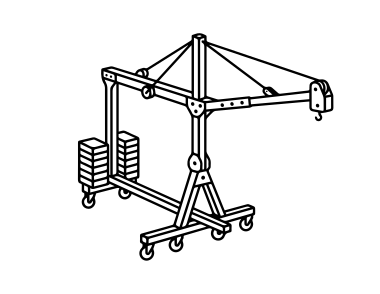
- Use rigid anchorage points or points with very limited flex. In cases where fall height is limited, flexible anchorage systems (temporary webbing or rope lifelines, fixed cable lifelines, etc.) are not suitable because, in the event of a fall, the worker would impact the ground due to the deflection of the element. It is advisable to use rigid anchorage points such as rail lifelines or aluminium gantries.

About aluminium gantries
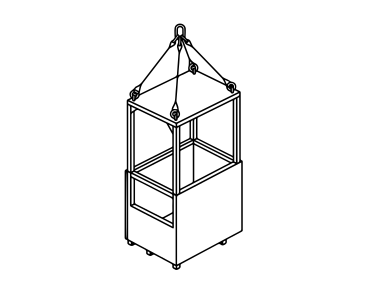
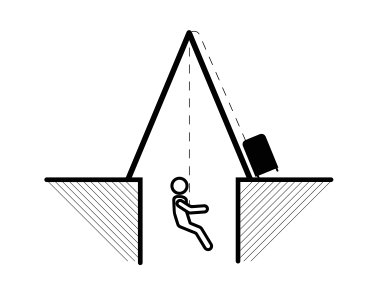
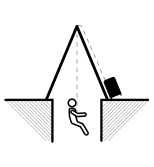
Aluminium gantries are versatile, easily dismantled and transportable solutions used as anchorage points and certified as anchorage points for people (EN 795B) and for lifting loads, including a combination of both. Depending on the needs of the operation, gantries can range from 2 m in height, 2 m in beam width and 5,000 kg load capacity. They can also be used for rescue. They are an ideal solution for many jobs in water treatment plants, work on large vehicles such as lorries, buses or trains, and use in factories where there are peaks in workload or possible interference with permanently installed lifelines.
- Use of short-fall lanyards: at Accesus there are lanyards shorter than 2 m in length and with a shorter energy absorber, allowing work at heights where the fall distance is around 4.5 m. This gives us almost an extra metre and a half of safety.
- Use of retractable fall arresters: retractable devices are safety elements that operate by engaging a brake when the speed is high, like car seat belts. For this reason, the retractable device can stop the fall at that very moment, preventing the webbing or cable from elongating. Accesus offers retractable fall arresters in different lengths, as well as cable or webbing versions for vertical or vertical and horizontal use. The latter are used when the anchorage point is on the ground (fall factor 2) and the fall is greater. They are special because they incorporate an extra energy absorber to absorb that additional energy.